
Leading Digital Transformations: Balancing People, Process, and Technology to Drive Significant Cost Savings
When the SVP of IT comes to you and says, “We need to do something different,” you listen. This is how I led a cross-functional, multiple value stream delivery team to deliver a digital transformation at ACI Worldwide. The result: $2.5M in annual savings in IT Software spend.
Mitesh Mehta, the then-Senior Vice President of IT at ACI Worldwide was faced with a significant problem. His overall IT spend was focused on Salesforce: a single platform that required significant upkeep and maintenance due to over-customization. While Salesforce was originally used as a customer case management platform, it had quickly turned into a messy amalgamation of program and project management, internal help desk, and incident and problem management solutions that were becoming increasingly fragile. And in a business where downtime could impact financial transactions globally, speed and stability are critical.
Discovery
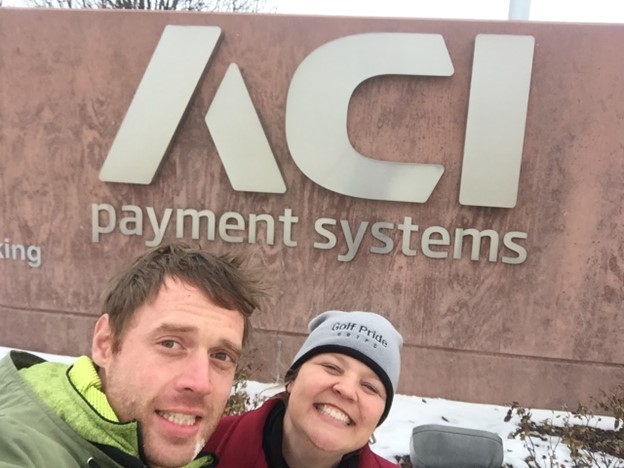
Partnering with Mitesh, we asked for a week onsite at ACI Worldwide headquarters to gain a clear understanding of what the needs were. Since Salesforce permeated the entire organization, it was important to understand not only who was using it, but which business processes it supported and any other integrations.
I led whiteboard sessions with Help24, PPM, SecOps, and ITSM leadership to understand how their work processes connected to one another in addition to what other technology platforms were in use. What we came to realize throughout the sessions is the technology wasn’t the only problem. ACI Worldwide was significantly siloed across the organization. Data was gathered in different ways, ways of working were fragmented within each part of the organization, and different teams spoke different work languages.
Design
It was clear this was not just a technology concern. We needed to provide them a framework to cut across organizational silos while implementing a more common language and streamlined processes. We needed agile. As a SAFe® Practice Consultant (SPC) and having pushed my solutions architects to embrace and certify in Scrum and SAFe® as well, we sat down as the designated implementation team to determine our path forward.
The technical solution of the Atlassian products included Jira, Jira Service Management, Confluence, Bitbucket, and several Marketplace Apps. But we also needed a sophisticated integration platform to facilitate transactions between Salesforce and Jira Service Management. We chose Workato as the IPaaS to ensure the continuity of data and knowledge sharing between Salesforce, Jira Service Management, and Confluence.
Delivery
The project was broken into three main value streams. PPM, ITSM, and Help24. For PPM, while not fully ready to embrace the larger and more intricate ceremonies of SAFe®, we brought forward the most important pieces of the framework. Core values of Transparency and Alignment, a focus on quarterly planning, and trusting teams to create effective backlogs while understanding project priorities were where we started.
ITSM was a little easier as the stakeholders were well-versed in ITIL, but needed to shift left into more of a DevOps mindset. Instead of the typical fight between development and operations teams, we encouraged the ITSM organization to get involved with the development teams early and to change the data structures on intake to better match what development needed to prioritize bugs, defects, and incidents.
Help24 was where the friction came in. We had to navigate an increasingly complex set of requirements, a highly-performant team, and a zero-downtime mandate. These constraints led us to determine ever-more-creative ways to handle data sharing between systems while ensuring we met the client’s needs. And while we did take longer than expected, I had already discussed the impacts, the needs, and the timeline with Mitesh and the account executive to ensure we were all successful.
Change Management
We can’t forget about the people in this transformation. As part of the original scope, I determined we needed an enablement program and not just a few training courses. The client had multiple audiences (users, administrators, leaders) across multiple disciplines (PPM, ITSM, and Help24) as well as a few executives that needed a high-level overview. The client also needed something more bespoke than what was offered directly from Atlassian at the time.
The team created an amazing set of content that could be delivered via a Train-the-Trainer model. Since we were working with an overall audience of several hundred, collaborating with the client’s scenario champions in each area as well as with their training organization helped make the overall rollout a success.
Go-Live and Support
Once the client was ready and all signs were a go, we went live over a weekend and provided hypercare for the next two weeks. Maintaining key personnel on the project while ensuring responsive service, we transitioned over to their teams to maintain tier 1 support while leveraging the modern service management team for tier 2 and above.
There were no major incidents and only a handful of P1 defects flagged in the first month. Both us and the client were pleased with the success of the rollout.
ACI Worldwide was able to reduce their Salesforce footprint resulting in $4M of licensing savings. The overall cost of our effort meant they netted $2.5M in savings in their IT spend. With such a significant reduction in their operational spend, ACI was able to focus on additional priorities including M&A activities and data center modernization.
If you’d like to know more about how I’ve lead other successful transformation efforts, I’d love to chat! Contact me below!
Want to Chat?
Reach out if you’re interested in working together. I’d love to hear from you!